The goal
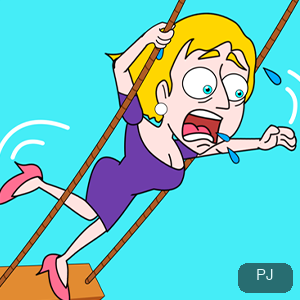
The game names its own goal: save the Girl
The game's own text reads save the Girl, so the win condition is stated plainly rather than left for you to infer. That settles what every attempt is being judged on before you touch play.
That matters when a run fails: the question is whether the girl was saved, not how far you travelled or how cleanly you moved. Read the result against the stated goal and the next attempt is easy to design.
Best score
A personal best is tracked across attempts
The front screen carries a best: readout that opens at zero. Because it stores the best rather than an average, only improvement moves the number.
A bad attempt therefore costs you nothing, and experimenting with a different approach is free. Each run either raises the readout or leaves it to try again. The business of the session is simply repeating the attempt.
Playing
A single play control starts an attempt
play is the only entry control, so restarting is quick and attempts are meant to be repeated. The fewer steps between attempts, the more the loop becomes the game itself.
That design hint is consistent with the headline number: a best score only makes sense when runs are cheap to launch. One tap back in is the reward for keeping the attempt tight.
Session
A repeat-and-improve loop around the best
A natural session is a short string of attempts: start, play, check the readout, retry until the best moves or the mood passes. Because failed runs carry no penalty, each round can stand alone.
Stopping any time after an attempt wastes nothing, since only the best result is kept. The scenario sets the length of a sitting: once the situation reads clearly, the attempt has already taught you most of what it can.
Loading
Title, play, and best: 0 are the ready check
Our captures return the same four items on every visit: the game title, the save the Girl line, play, and best: 0. Once all four are visible, the game has finished loading.
If only the artwork is present, loading is still running and a reload simply restarts it. Waiting for the full four-item screen is the cheapest way to avoid a mid-load restart.
On the shelf
A route puzzle with a rescue at the end
The Puzzle shelf pairs Save The Girl 3 with Thief Puzzle Online as scenario brain-teasers, while Road Connection leans on routes and Mahjong Story 2 on tile matching. The contrast is where the choice lives.
Choose this one when a single situation to solve is the appeal; choose the route-heavy entries when the draw is long planning. Both live on the same shelf, but they test different habits.
Common questions
The goal and the best readout
What is the objective in Save The Girl 3?
To save the girl. The game states it in its own text, and each attempt is judged on whether that happened.
Does a failed attempt hurt my score?
No. The screen tracks a best score, so only your best result counts and a bad run costs you nothing.
When does the best number change?
Only when you improve. The readout stores the best rather than an average, so a run that does not beat it leaves the number untouched.
Is it safe to stop between attempts?
Yes. Stopping any time after an attempt wastes nothing, because only the best result is kept.
How is it different from other games on the same page?
The shelf groups it with Thief Puzzle Online as scenario brain-teasers, separate from the route-heavy puzzle entries.