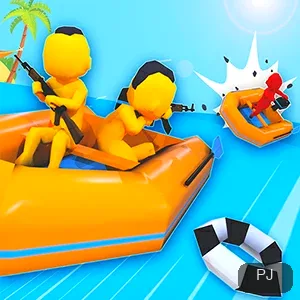
Movement
Move is the in-run control
The Move control is what steers your boat, and it is the one in-run control the screen names. The run is about positioning and timing rather than tapping a single button.
In a battle format the useful habit is keeping room to retreat. A boat with an escape line can survive exchange after exchange, while a boat pinned against the edge has to win the next clash outright.
The Store
There is a Store, and it runs sales
A Store sits on screen with a SALE marker in every state we captured, so the shop is a standing part of the loop rather than a one-off screen you reach once.
A rotating sale is the game's way of timing your spending: holding currency until the marker shows buys more for the same amount, while buying whenever you happen to be flush usually means full price.
What you spend it on
Currency from runs feeds the store
The action is named Boat Battle in the game's own text, and the store is where the results of that action appear to go. The two surfaces point at each other.
So the loop is battle, collect, then check the store, rather than treating the shop as something separate from play. A battle that earns little simply changes the shopping plan for the next visit.
Session shape
Battle, collect, Store: one loop per visit
A visit can end cleanly after one loop: battle with Move, then check the Store to see whether SALE is showing. Stopping there loses nothing, because the next run simply runs the loop again.
Because the store stands on the opening screen, a short session still gets the whole shape of the game (one action, one shop glance) and a longer session is the same cycle repeated until the sale changes.
Loading
The wait before your first Move
The first screen can sit still before the battle readies: the build arrives through a player frame, so what looks like an empty start is often the game still loading in.
Wait on that first screen rather than reloading, because a refresh begins the whole load again from the start. The Move control shows up once the battle front is ready, and the wait simply returns if you do.
Shelf choice
Boat Battle's two surfaces
Boat Hitting Out splits its play across two surfaces: the battle where Move matters and the Store where SALE matters. Both are visible on the opening screen, so the structure is never hidden.
If the session is for fighting, treat the shop as a quick glance at the sale marker; if the session is for building up, keep battles short and shop between them. Matching the visit to the surface is the whole decision.
Common questions
Movement and the store
How do I control my boat?
With the Move control. Steering is positional rather than a single tap action, so keep room to turn and retreat during battles.
Is there a shop?
Yes, a Store with a SALE marker that stands on screen, so it is part of the regular loop rather than a one-off screen.
When should I spend?
Under the SALE marker if you can. The marker is the game's timing signal, and buying whenever you happen to hold currency usually means full price.
Why does the first screen sit still?
The build loads through a player frame before the battle is ready. Wait rather than reloading. A refresh starts the whole load over again.
Can a short visit still be worth it?
Yes. One battle with Move and one glance at the Store's SALE marker is a complete loop, so even a brief session gets the whole shape of the game.